


Why Packing Your Shipping Container Properly Matters | We Explain How To
A shipping container is certainly one of best favoured and secure forms of self storage around today, but how you pack one determines just how well your belongings come back out of it again. A well packed storage container holds more than if not correctly packed, keeps everything dry as well as undamaged and lets you get to what you need in your unit without having to spend a day unpacking it into the storage yard. Yes, this has happened. But don't worry - it's easy and your removal or van and man service will have loads of experience in packing one - we've a list of local removal people we can suggest if you're not packing it yourself.
A badly packed unit does the opposite of being useful. You don't want boxes collapsing under their own weight, furniture getting scratched and the very item you need being at the back of your unit.
The good news is that packing a container correctly is not difficult in the slightest. It only takes a little planning, suitable materials together with a sensible loading order i.e. a bit of common sense. This handy guide walks through the whole process from choosing the right size of storage container to closing the units doors. So whether you are storing a full house contents, storing business stock or simply a few bits and pieces of furniture between moves, read on...
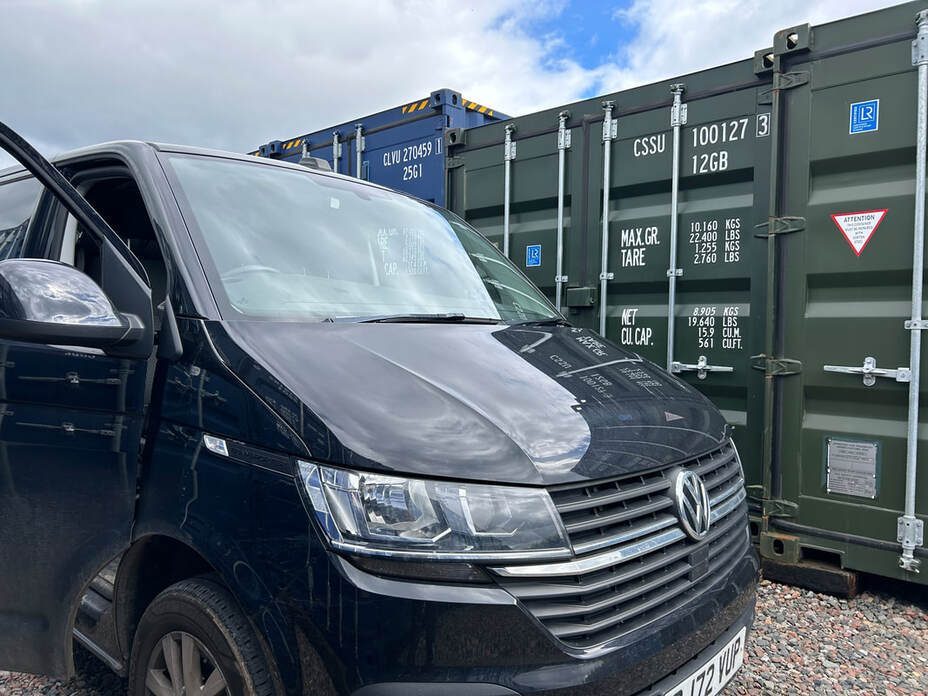
Loading day - a van full of contents about to go into your storage container.
Plan Before You Lift A Single Item Into Your Unit
The most common packing mistakes happens before anything is actually loaded into a unit. For example, turning up last minute without a plan. A few minutes with pen and paper to enable some organisation will save you hours of time later on.
Let start with the size of your unit. As a guide, a 10ft or half size shipping container unit provides around circa 80 square feet of floor space and is ideal for storing the contents of a one-bedroom flat, a garage or small business's stock even. It will hold around a Luton van of contents.
A 20ft or full size container offers double the space at around 160 square feet of floor space and comfortably hold the contents of a two or three bedroom house of contents which is ideal for a house move. Both units are about 2.4 metres high inside and that height is storage space too remember - the higher the height, the more usable space. We often hear people telling us they are not bothered about the height of a unit, but this simply is not correct. The more height the better - and we do have some units which have the same floor area, but increased height to enable even a greater amount of contents to be stored efficiently.
Now work through the following:
• List everything going in to the unit if you can, room by room - Use our AI room estimator on the home page. It lists items for you.
• Mark the items you will need to physically reach during their time in storage - perhaps seasonal items such as clothes, important documents, work tools or business stock.
• Note the big, heavy and bulky items because they will dictate loading order.
• Measure anything that is very large and/or bulky. A standard shipping container's door opening is approximately 2.3 metres wide and just a little under 2.3 metres high. That's generally far bigger than the average front door of a house.
If you are torn between two sizes, it makes sense to choose the larger unit. There is not a massive difference in price between a full size and half size container unit each month. A shipping container crammed with contents up to the roof with no room to move is much harder to use and we don't want to be forcing things in otherwise damage could occur.
Gathering The Right Packing Materials
Good materials cost way less than having to replace damaged belongings. Why not have these ready before loading day to make life easier:
• Strong double walled boxes in two or three different sizes. They can be obtained on line these days for far less than you think. Matching boxes can stack securely; a jumble of different sized boxes may not and could result in wasteful gaps within your unit.
• A supply of smaller boxes for heavy items, e.g books and documents but larger sized boxes for lighter items such as bedding.
• Some decent quality packing tape and use marker pens and labels to label your contents e.g. cutlery, cups and saucers.
• Paper and bubble wrap for anything fragile. Avoid newspaper, as the ink transfers.
• Removal blankets and dust sheets to wrap and cover your furniture.
• Breathable mattress and sofa covers.
• Ratchet straps or rope to secure the load while you transport your contents in a vehicle.
• Moisture absorbers, which we cover in more detail below.
Avoid bin bags as they tear and cannot be stacked. They can also trap moisture against whatever is inside.
Prepare Your Belongings Before They Go In
Everything that goes into storage should be clean and dry. Dirt, food residue and damp are the main causes of smells and all three are easy to prevent.
• Appliances. Fully defrost fridges and freezers at least 24 hours ahead of storage and wipe them dry leaving the doors slightly open. Drain the hoses on washing machines and dishwashers so there's no water that will evaporate inside the storage unit.
• Furniture. Dismantle beds, tables and wardrobes if you can. It saves a lot of space within a storage unit as well as removing strain off joints. Tape the screws and fittings to the item in a labelled bag - you don't want to lose these.
• Soft furnishings. Wash and thoroughly dry clothing and fabrics, bedding and curtains etc. Vacuum clean sofas and mattresses.
• Wood, leather and metal. Give wood a coat of polish and leather a conditioner. Wipe your tools, bikes and bare metal items with a little oil to keep rust away. WD40 is superb for this.
• Garden equipment. Clean off soil and grass and remember to drain the fuel from mowers and strimmers as you don't want your unit smelling of it.
• Boxes. Fill every box to the top of your unit without blocking air vents (so they cannot crush), with the heaviest boxes at the bottom. Keep each box light enough to lift comfortably and make sure tape the base well to avoid spillage.
Keep Moisture And Condensation Out
A steel container is wind and watertight but can sometimes reacts to temperature - so don't keep opening the container door if you don't need to if its minus five degrees in winter - we don't want to let cold air in. When warm, moist air such as your breath inside meets cold metal, condensation can form on the roof and walls. Our units are made for storing furniture but given the British climate, it is still worth guarding against, especially during winter time.
• Load only dry items. If you have to load in the rain, towel things off before they go in.
• Keep a very small gap around fabrics so that air can circulate and don't block the containers air vents designed for trickle venting.
• Leave a gap of a just a few centimetres between your goods and the steel walls.
• Cover furniture with breathable cotton sheets or blankets as wrapping them tightly in plastic can seal moisture in should they contain moisture prior to them being packed.
• The rule is - don't pack a unit with damp or wet items.
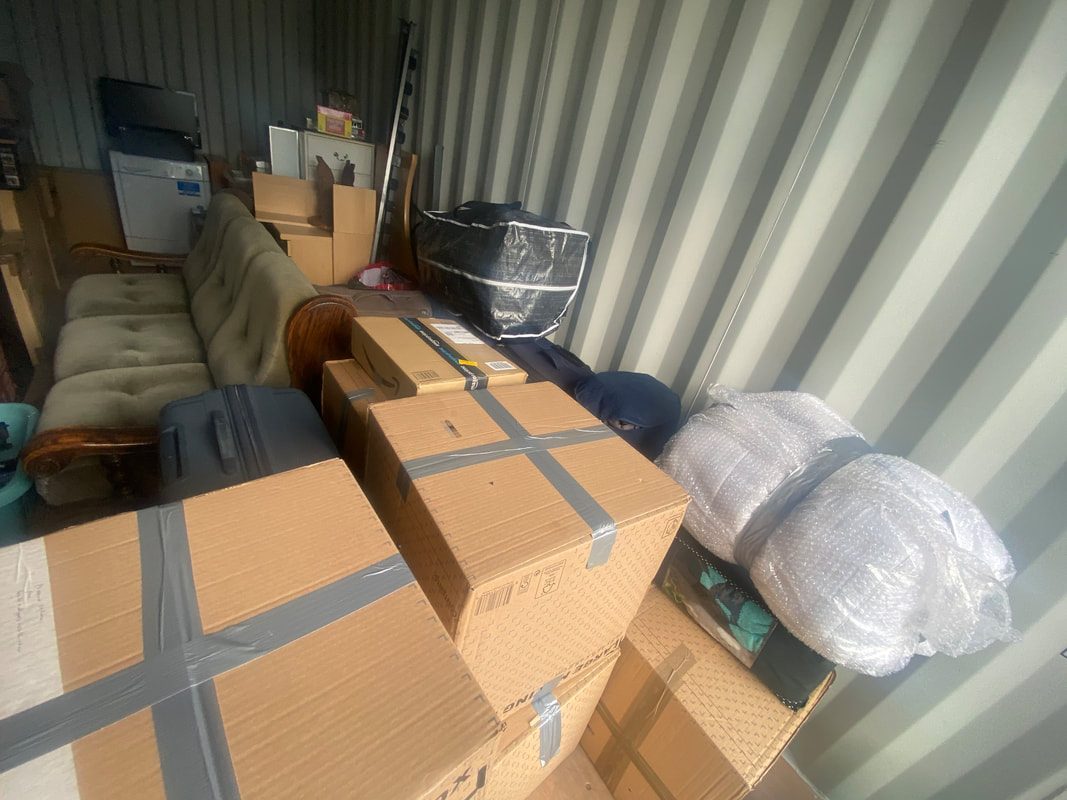
Boxes and furniture packed together - heaviest items at the bottom, spread evenly.
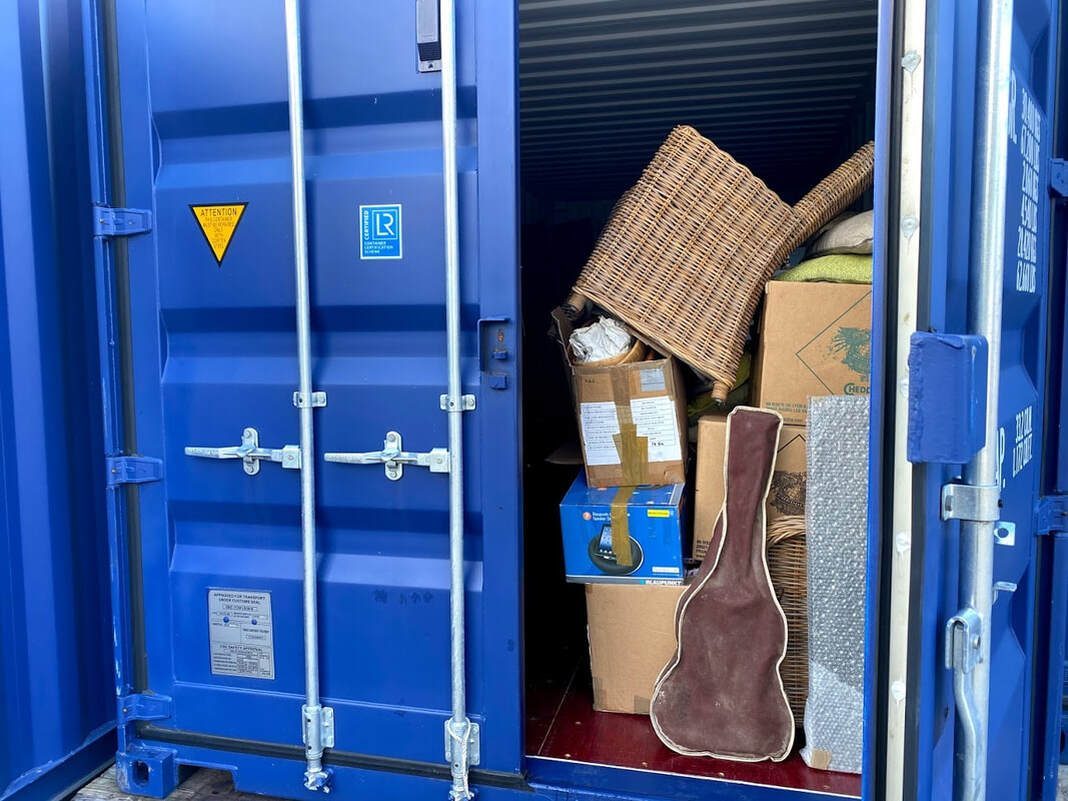
Built in tiers from back to front, with the load balanced evenly side to side.
Load In The Right Order
The general rule to remember is quite simple: pack heavy items at the bottom of your unit and at the back of it, with lighter items on top. Pack anything you will possibly need to retrieve at the front. Loading contents in that order helps keeps to keep items stable and your boxes uncrushed.
1. Plan ahead and don't rush.
2. Always load the largest, heaviest items first. Appliances, bulky items, wardrobes, chests of drawers and sideboards should be stacked against the back wall (leaving a couple of cm gap), spread evenly across the width.
3. Build in tiers. Work from the back of the unit to the front completing each tier from floor to top of ceiling before starting the next.
4. Stack heavy boxes low down and lighter boxes higher up. Never put weighty boxes or items on top of fragile items.
5. Balance the weight from side to side within a box - or if its going in loose. Do not stack all the heavy objects along one wall.
6. Try to fill gaps. Cushions, fabrics, duvets and bags of soft furnishings can be wedged into gaps and spaces to stop the load from shifting.
7. Load what you need last. Items you expect to collect during storage go nearest the front doors. Don't be caught out with this one.
Where boxes are the same size, a good trick is to overlap them like brickwork. A stack tied together like this is far steadier and stronger than separate unstable tall columns.
Make Loading Day Easier
A little organisation on the day itself makes the job quicker and safer.
• Bring help. Two people can load a container in a fraction of the time, and heavy furniture should never be lifted alone.
• Use a sack truck or trolley for appliances and stacks of boxes. It saves your back and protects the items.
• Load the van in reverse. Whatever goes into the container first should come off the van first, so pack the van with the heavy furniture nearest its doors.
• Lift properly. Bend your knees, keep the load close to your body and never twist while carrying.
• Wear gloves and sturdy footwear, and keep the area around the container doors clear of trip hazards.
• Allow enough time. Rushing the last hour is when boxes get thrown in and the careful stacking falls apart.
Use The Height And Leave Yourself A Way In
Most people run out of floor long before they run out of space. With around 2.4 metres of headroom, the upper half of the container is where the wasted room usually is.
• Stack boxes to the roof where it is safe to do so, using a sturdy step rather than stretching.
• Stand sofas on end if the frame is strong enough, and store table tops and bed frames on their edges.
• Use the space inside things. Fill wardrobes, drawers and clean, dry appliances with light items such as linen and cushions.
• Bring freestanding shelving if you are storing business stock, archive boxes or lots of small items.
If you plan to visit during the storage period, leave a narrow walkway down the centre or along one side. It costs a little space, but it means every box can be reached without unloading the container.
If you will not need anything until the day you empty it, skip the walkway and pack tightly instead. A snug load has less room to shift.
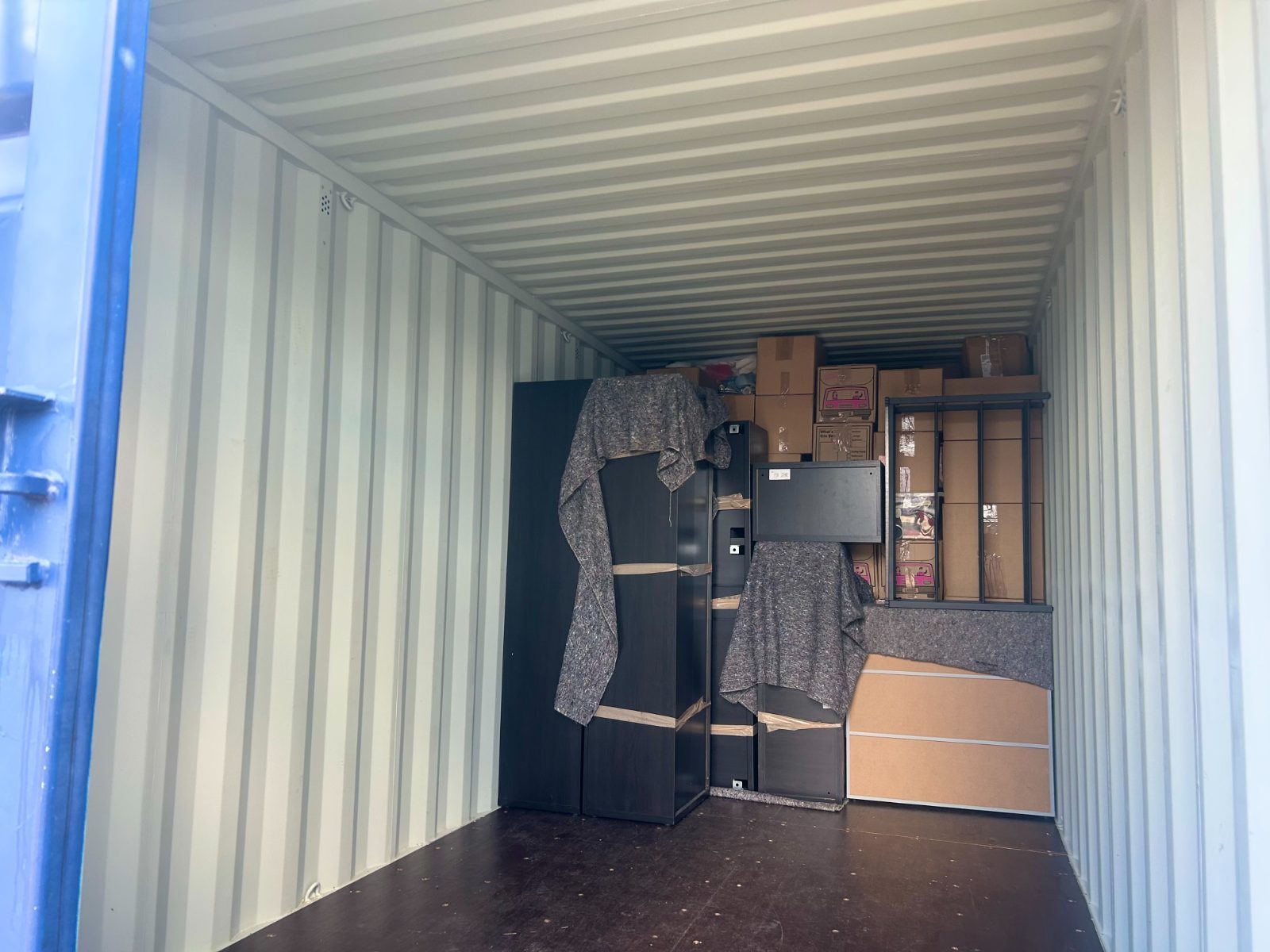
Furniture packed neatly inside one of our containers - plenty of headroom, evenly loaded.
Protect Furniture, Appliances And Fragile Items
Different belongings need different handling. These are the items that most often come out of storage damaged, and how to avoid it.
• Sofas and armchairs. Cover them with breathable dust sheets and keep heavy boxes off the cushions, which will otherwise stay flattened.
• Mattresses. Use a breathable cover. Sprung mattresses can stand upright on their long edge. Memory foam is better laid flat on top of the load with nothing heavy on it.
• Wooden furniture. Wrap it in blankets, protect the corners with cardboard and remove table legs where possible.
• Fridges, freezers and washing machines. Keep them upright with the doors wedged slightly open so that air can circulate.
• Televisions and electronics. Use the original boxes if you still have them. Store screens upright, never flat, and cushion them between soft items. Take the batteries out of remote controls, because they leak.
• Mirrors, pictures and glass. Be careful and wrap every one separately. Remember to stand them on their edge. A good spot is between a mattress and the container wall.
• Crockery and glassware. Wrap every piece in packing paper or bubble wrap. Stand plates on their edges and try to fill empty space in the box. Mark the box as fragile and keep it on the top tier if possible.
• Books and paperwork. Pack books flat in small boxes to protect the spines. Keep important documents in archive boxes well off the floor.
• Clothes. Wardrobe boxes keep hanging clothes in shape. Everything else can go into sealed boxes once clean and dry. But ensure they are dry.
Label Everything And Keep An Inventory
A box you cannot identify is a box you will have to open. Labelling takes seconds per box and saves a great deal of searching later.
• Label every box on at least two sides, not on the top. The top disappears as soon as another box sits on it.
• Write the room and a short list of contents, and give each box a number.
• Keep a matching list on your phone, with a note of roughly where each box sits in the container.
• Take a photograph of each tier as you finish it. Together they make a map of the whole load.
Keep the inventory somewhere other than the container itself. It is also useful evidence if you ever need to make an insurance claim.
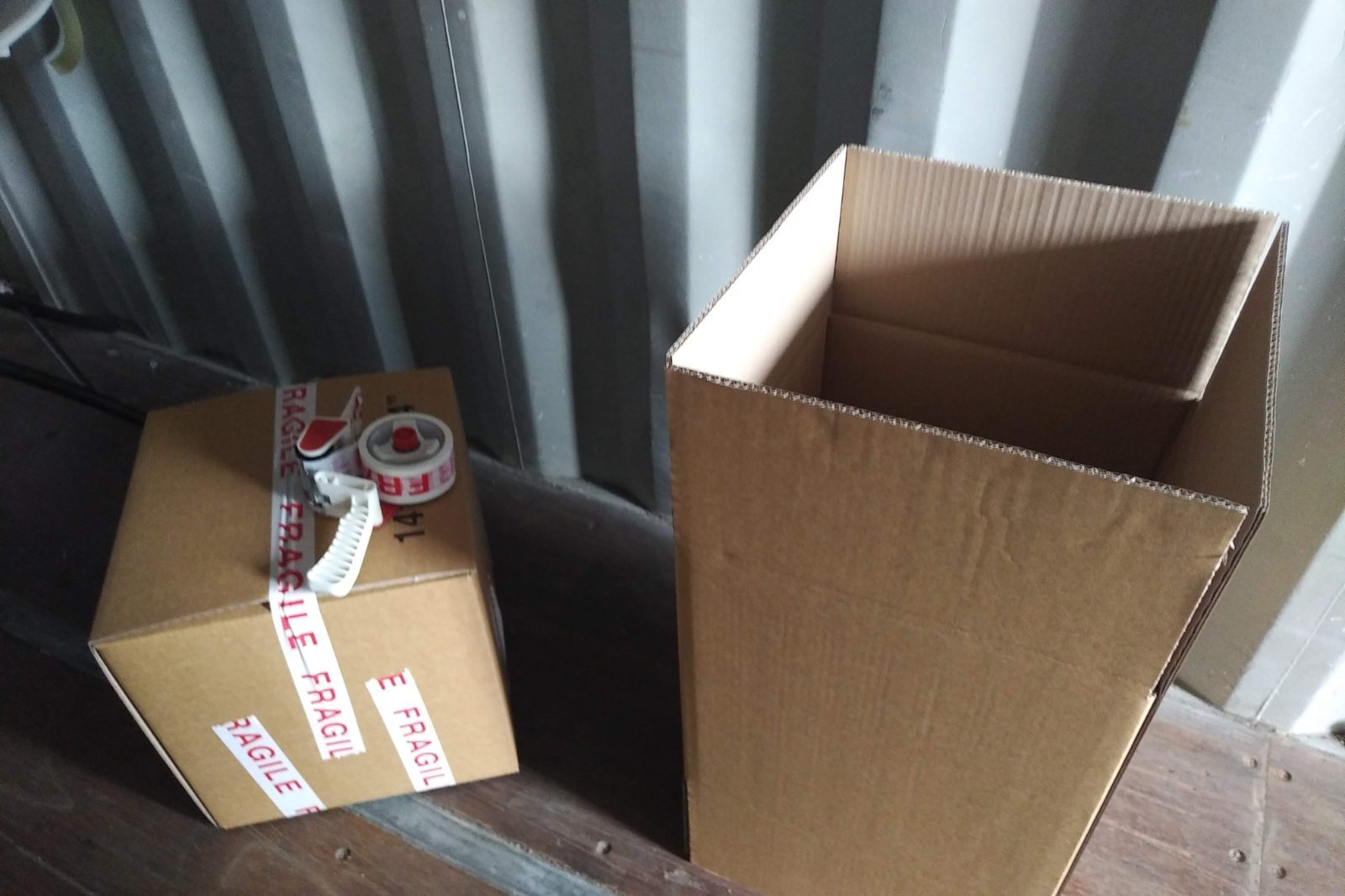
Clearly labelled boxes, filled right to the edges so nothing can shift in storage.
What Not To Store
Some things should never go into one of our storage containers, simply for safety, legal or practical reasons. Lets take a look.
• Flammable or hazardous goods, including fuel, gas bottles, paint, solvents, fireworks and chemicals are a big NO NO.
• Perishable food, or anything else likely to rot or attract pests and creates smells. It's a big NO NO.
• Living things, meaning plants and animals - that's pretty much common sense.
• Cash, jewellery and irreplaceable valuables - the onus is on you, but these really belong in a bank or a safe.
• Illegal goods of any kind - that's a massive NO. Also, Quad bikes, trial bikes and motorcars - these need to be in a lock up garage instead of a shipping container.
Please check with Container Storage In Carlisle before you load up and take a look at our question and answers FAQ page. It is also the moment to make sure your contents are insured for their full value while they are in storage - we can provide you with insurance for your contents.
Final Checks Before You Close The Doors
Before you lock up, take five minutes to run through this list.
• Make sure nothing is leaning against the front doors or likely to fall out when they are next opened.
• The last tier is strapped or positioned securely to the lashing points inside the container if you really are cramming it full.
• Moisture absorbers are in place if you're worried about the cold, though we find this is not an issue within our units.
• You take an inventory of what is stored - not essential, but its good practise.
• Both doors are fully closed and every locking bar is engaged.
• A good-quality padlock or container lock is fitted and you have the keys with you - we supply these - just ask us.
If you are storing for more than a few months, call in from time to time - there's no harm doing this. Check that nothing has shifted for example.
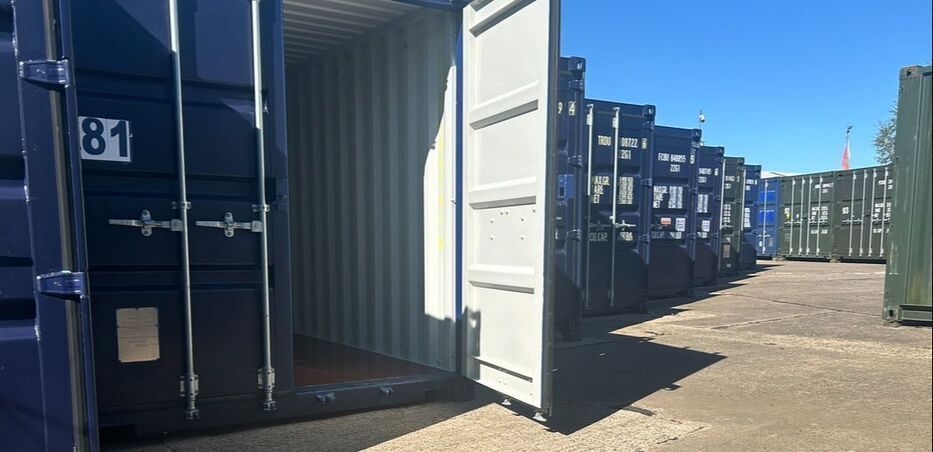
Plenty of room to pack methodically and still leave access if you need it.
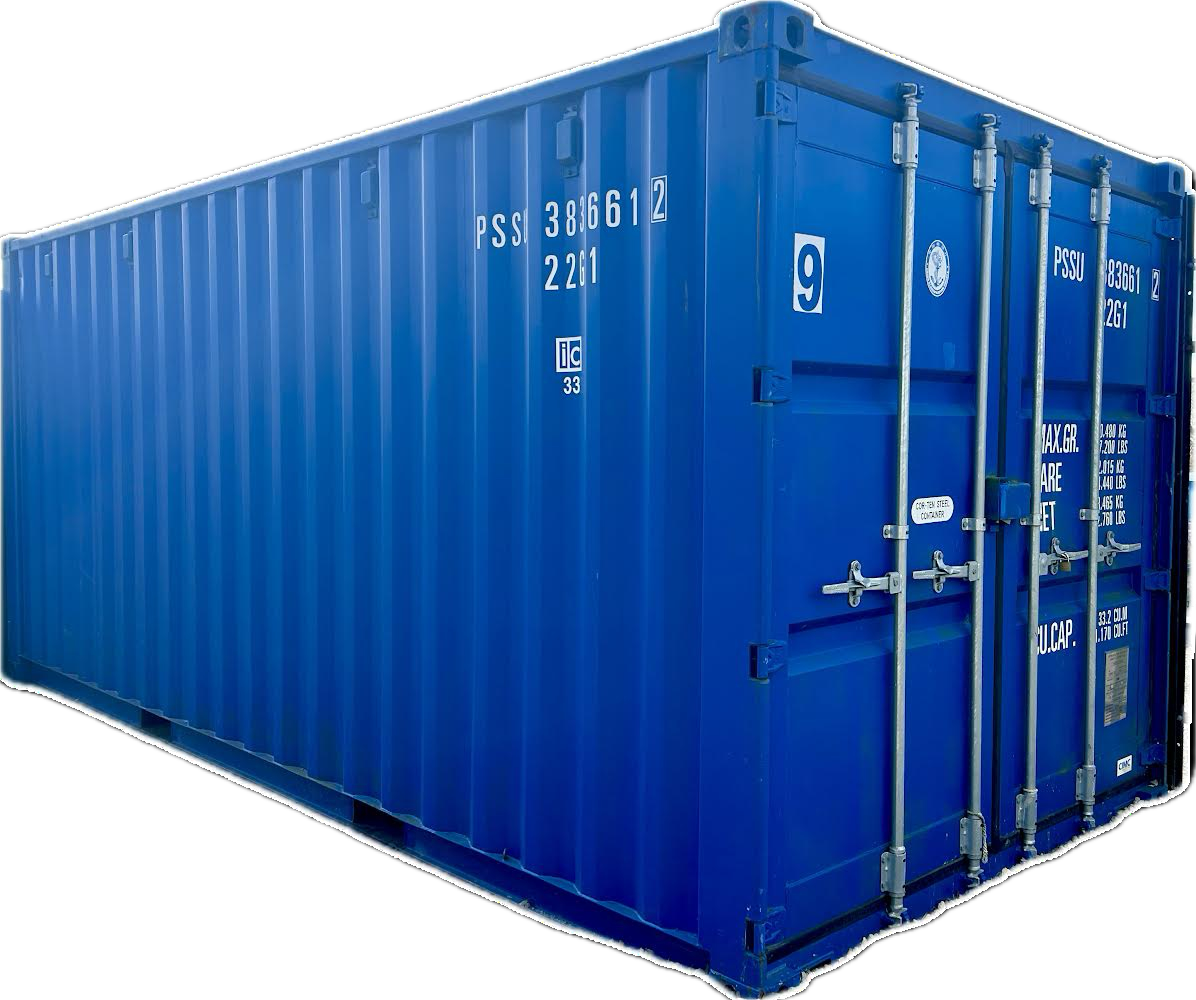

Contact Container Storage In Carlisle today
Packing A Container - Common Questions
Will my belongings get damp inside a shipping container?
Not if it's packed correctly. Bear in mind our units have trickle vents and come in as brand new units so they are suited to full house moves. These units have been designed to travel the high seas through the very worst of weather. Avoid opening doors in sub zero temperatures if possible.
Can I get back into my container once it's packed?
Yes - our sites offer 24/7 gated access with your own Your Lock Your Key® padlock meaning you can come to site whenever you want. Our main branch is on the huge Rome Street Depot which is a huge storage hub these days. Container Storage In Carlisle never closes.
How do I know what size container I need?
Our Sizes & Help page runs through what fits in a 10 foot, 20 foot and 20 foot Hi-Cube container - but have you tried our free AI Unit Size Estimator because it not only works out the best size of unit from a few photos, but it actually lists each item. Its amazing.
Packed with a little thought and forward planning, a shipping container will keep your belongings safe for years if needs be. They are dry and easy to reach for as long as you need one for.
Plan first, prepare everything properly, load heavy to light items within your unit and from back to front and don't put wet items in ie. drain that washing machine or fridge. Do those little things and the moment you unload will be as straightforward as the day you packed your unit. Enjoy storing with Container Storage In Carlisle.
Ready to book your container?
01228 590397Expert packing advice and secure self storage covering Carlisle, Penrith, Wigton, Brampton, Aspatria, Scotby, Dalston, Wetheral and the wider Cumbria area.